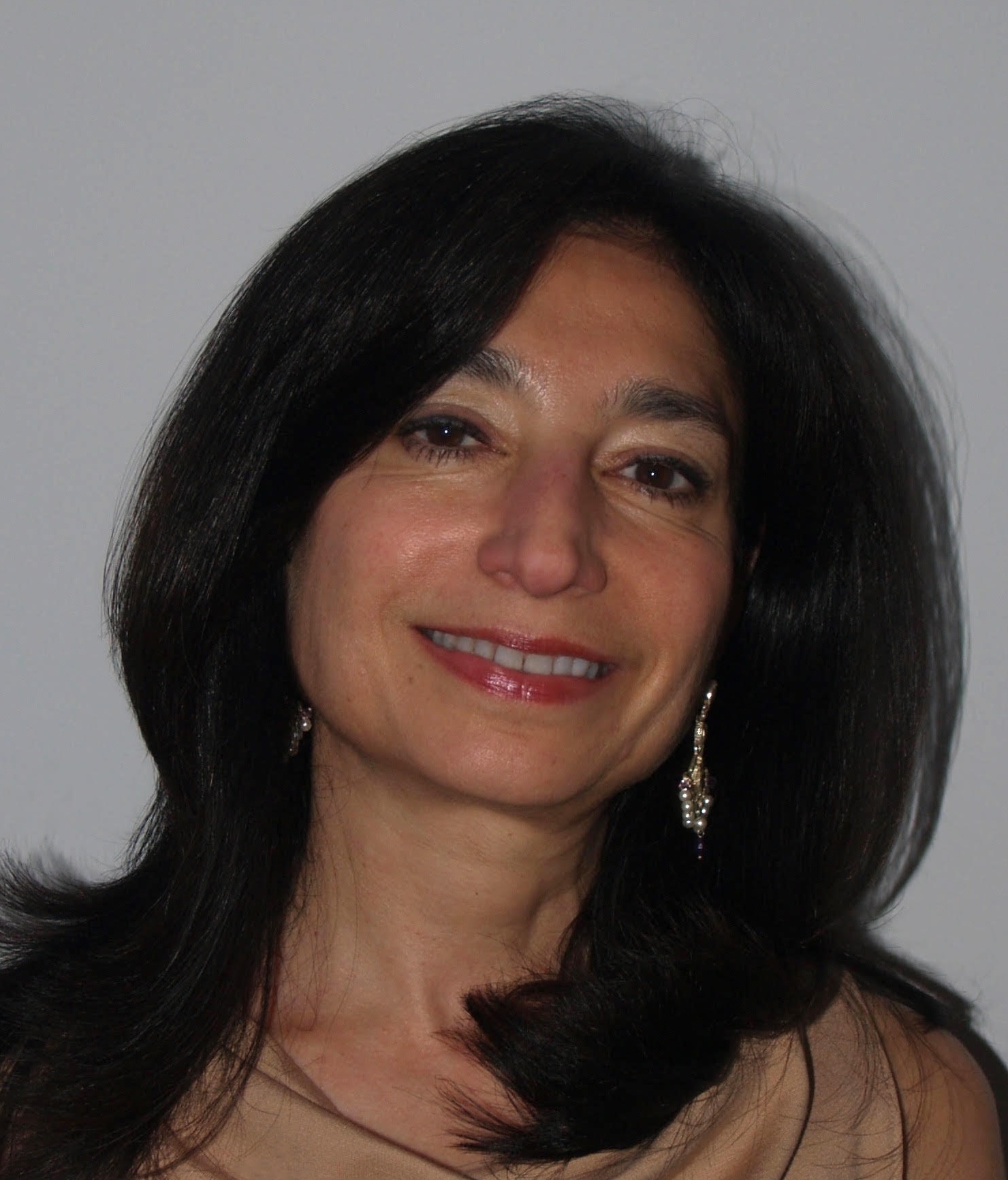
Banafsheh Keynoush: Geneive Abdo, thank you for taking the time to talk with Contending Modernities about your recently published book The Shi’a in the Modern Arab World: Between History and Autonomy. I wanted to begin by asking you to talk a little bit about what drew you to this timely project and what you see as the primary intervention it makes in the study of religion in the Middle East?
Geneive Abdo: Thank you for the opportunity to conduct this interview and talk about the book. There is a void in Western literature as it regards Shiism in the Middle East. From the 1970s onward, scholars focused on Sunni Islam in their research and publications for several reasons, two of which I will name here. First, Sunni movements were at the center of political change in the Middle East, sometimes violent. Second, Sunni social movements, such as the Muslim Brotherhood in Egypt, were powerful but misunderstood, and thus became the focus of Western researchers in the 1990s. It was not until the U.S invasion of Iraq in 2003 that Western policymakers, academics, and public intellectuals became acquainted with Shia Muslims outside of Iran. Despite their different geographies and identities, they were seen as pawns under Iranian control. They were seen as partisans in the 1979 Islamic revolution. The only comprehensive work on the subject prior to the book we are currently discussing is The Arab Shi’a: The Forgotten Muslims by Graham E. Fuller and Rand Rahim Francke, which was published in 2001.
When the US invaded Iraq , there was an accepted notion among Washington policymakers and its regional allies, specifically the Gulf Arabs and Israel, of a dangerous “Shi’a Crescent,” that is, an arc through West Asia that encompassed the world’s many Shia communities under putative control of an expansionist clerical regime in Tehran. Historically, little understanding or knowledge had been applied to the complexities and differences between Iranian Shiism and Arab Shiism, or to the aspirations and challenges of Shi’a communities within their own countries, where they often are either marginalized minorities or, even where they are majorities, lack economic and political power.
For the most part, these ideas have remained part of the conventional wisdom about the Shi’a in the Middle East for nearly twenty-five years. Based upon my experience as a correspondent with the Guardian in Iran, and the research for my last book, The New Sectarianism: The Arab Uprisings and the Rebirth of the Shi’a-Sunni Divide, I came to believe important changes were occurring within Arab Shi’a communities that should be documented. This new book, The Shia in the Modern Arab World, presents a new lens for understanding Arab Shi’a communities in the Middle East on their own terms—not as agents of Iran or threats to Sunni governments and orthodoxy—but as citizens seeking equal rights and participation in national movements. The book documents their historic economic and political marginalization in countries such as Lebanon and Bahrain, and their new efforts to combat these inequities.
Banafsheh: The authors in the book develop case studies on the status of the Shi’a in Lebanon, Iraq,Yemen, Bahrain, Saudi Arabia. They touche on issues of national identity, resistance, and clerical and secular reform. Can you unpack briefly how these topics connect with one another, and form new spaces that reshape the modern Shi’a Arab world.
Geneive: The Arab Shi’a communities we wrote about are complex and diverse and the challenges they face in their respective societies are different. As the authors in the volume document, the Arab Shi’a can neither be dismissed merely as allies of Iran, nor can they be thought of as simple subjects of their Sunni rulers and influencers. Rather, their evolving identities in each country are different and diverse; they are shaped by generational divides, changing regional and domestic politics, and a new sense of autonomy that defies modern history in the region and our established understanding of the Shia’s role in it.
In two country-specific case studies in the book —Iraq and Lebanon — the Shi’a have parties who represent them inside the government. In Bahrain and Saudi Arabia, they have scant direct government representation. Their efforts to address their economic and political marginalization are made in opposition to the government. In Iraq and Lebanon, Iran has had a direct hand in influencing how Shia groups and movements behave politically and militarily. In Bahrain and Saudi Arabia, this is not the case. In some countries, they are a sizable part of the population, in others the majority, and still in others a minority.
Of course, their political power, or lack thereof, varies depending upon these circumstances. Akeel Abbas shows how the Shia, who are the majority of the population, have made great strides in carving out a national identity that has evolved since the start of the 2003 US-led invasion. Abbas, who is a sociologist, presents a masterful and well-documented analysis of how part of the population, particularly the younger generation, has made progress toward forming a new national identity that rejects Iranian influence and all foreign influences. He also documents the younger generation’s complex relationship with the Shia clerical establishment, who has had a significant role in Iraqi religious and public life historically and particularly since 2003. For example, although the younger generation, as indicated in extensive polling over many years, firmly believes that the clerical establishment should play no direct role in politics, they are not anti-clerical per se, and at times have relied on key clerics to bolster their political activity.
The Shia in Iraq, Lebanon, and Saudi Arabia are distancing themselves from their established political and historical references, most notably Iran’s clerical establishment, and seeking a new identity within their own societies that is less prone to state and societal marginalization. Generally perceived as subjects of Iran and as unreliable citizens in their respective states, the Shi’a have become more involved in domestic affairs while also creating transnational networks with other Arab Shi’a communities.
Banafsheh: As you note in the book, the scholarship on religion, reform, and modernity is rooted in debates surrounding the role Iran’s marja’iyat, or institution of Shi’a jurisprudence, plays in influencing the Arab Shi’a, which also plays out against the backdrop of current conflicts between Iran and its Arab neighbors. There is, of course, a history of Iranian influence in this sphere. But what has changed in this regard and are there still some of the elements of continuity that ensure this ongoing Iranian influence over the Arab Shi’a?
Geneive: Much has changed within Iran and in the region since the 1979 revolution, when Ayatollah Ruhollah Khomeini vowed to “export” the revolution. This term for decades was misunderstood in the West and interpreted to mean only military expansionism. Although Iran, through its proxy militias, have been present militarily in Arab countries in the Middle East, the aim of the revolution, as the late Ayatollah Ali Khamenei explained, was about religious expansionism and aimed at making Muslims feel that they had a unified Islamic identity. In the eyes of Khomeini and Khamenei, the ummah—the collective community of believers—had lost its way due to colonialism and other Western influences. In their eyes, the Islamic revolution brought the ummah back to the righteous path.
This stated mission—a key pillar of the Islamic revolution—was the raison d’etat for the Islamic republic’s religious and political intervention in Arab countries. Sometimes these were direct interventions and sometimes they were indirect. And there was receptivity to this influence among Shia during the early years after the 1979 Revolution, which established Hezbollah in Lebanon, militant groups in countries such as Bahrain, and gave legitimacy to the marja’iyat in Iraq, even though the clerics faced formidable repression from Iraq’s Sunni-dominated state. In the first chapter of the Shi’a in the Modern Arab World, Banafsheh, your great chapter presents the conceptualization of the marajiyat’s ideas and how they evolved over time.
However, in recent years, particularly since the Arab uprisings fifteen years ago, Iran’s influence among the Arab Shi’a has waned. There are several reasons: Iran’s clerical establishment’s repression of its own citizens during several significant rounds of homegrown protests; its loss of influence among Arab youth populations, particularly in countries such as Lebanon and Iraq, where youth movements are more interested in the secularization of the state and a nationalist identity which opposes foreign influences; and an opposition to the key pillar of the 1979 Islamic revolution, the velayat e-faqih (the guardianship of the jurist). Arab citizens, along with a vast majority of Iranians, according to consistent opinion polls over many years, see this clerical form of governance as not only repressive for the advancement of human rights and gender rights, but also at fault for Iran’s lack of economic and technological development. As Arab countries embraced technology, the Iranian regime was seen by comparison as embodying a worn-out notion of an Islamic state that was stuck in the past. It had lost its appeal. For the most part, its legitimacy as a regional actor was seen as useful primarily due to its formidable military opposition to the Zionist state of Israel and its opposition to the occupation of Palestine, especially as some Gulf states reached new conciliatory alliances with Israel. Israel’s genocide in Gaza also gave Iran credibility in the region as the only state left standing that was willing to fight for the Palestinians. The Shia in the Modern Arab World documents these changes in great detail in each chapter.
Given the seismic changes in the region, it is hard to see how Iran will maintain the “soft power” or even its military power it has had in the past on the same scale. Yes, Hezbollah, which is now controlled directly by Iran’s Islamic Revolutionary Guards, in the aftermath of the assassination of its leader Hassan Nasrallah and other old-guard leaders, is under Iran’s direct influence. But the Shi’a in Lebanon now have complex and different views of Hezbollah, including whether the group should be forced to disarm in the face of daily Israeli bombardments of Lebanon, including the capital Beirut. The United States and Israel are pressuring Lebanon’s new government to disarm Hezbollah. While some Lebanese Shia are in favor, others believe the consequences of doing so are too great. The book’s chapter on Lebanon, written by Mohanad Hage Ali, a longtime scholar of the Shia and Hezbollah, addresses these issues.
Banafsheh: As a final question, I wanted to ask you to reflect on our current moment and the reality of conflicts, wars, and attempts to rebuild peace in the Middle East, mindful of the tensions with Iran and the ramifications for the regional order. I wonder what you might say to those who either see Iran’s Shi’a influence retracting or either growing at this moment? And what, if any, alternatives to the current view of on these topics you might propose in diagnosing and addressing challenges in contemporary Shi’a politics?
Geneive: Shi’ism, as it has been understood since the 1979 revolution, is facing multiple crises of legitimacy. Although the United States and Israel’s assassination of Khamenei produced widespread sympathy among Arab Shi’a, which was expressed in demonstrations and commemorations across the Middle East, the fact remains that he had been discredited long before his death, not only in Iran, but across the region. His successor and son, Mojtaba, lacks religious authority even more so than his father and his appointment as supreme leader is another departure from the traditional Shi’a clerical system which was supposed to be based on a meritocracy. Ayatollah Ali al-Sistani in Iraq, who for years provided the religious legitimacy Khamenei lacked, is reportedly near death at the age of 94. His death will create an enormous vacuum within the Shi’a religious hierarchy.
Politically, I do not see Iran’s influence increasing after all its aggression towards other Gulf countries during the war. I do not see how they come back from that. Arab Shi’a citizens in the Gulf are suffering because of it, and some blame Iran. For example, Bahrain’s government, reacting to Iran’s destruction of parts of the country and its attacks on the US military base in Manama, has once again launched a repressive campaign against its own Shia citizens, repeating the tired narrative that they are all Iranian agents. This state-concocted narrative was widely believed among Sunni Bahrainis during the Shi’a-led uprising in Bahrain in 2011. Iran’s proxies, too, have been deflated, aside from the Houthis. I believe all of these events will continue to inspire the Arab Shi’a to find their own path away from Iranian influence, as the book documents.